- Important
- This implementation utilizes the CHAdeMO protocol, which is subject to Patents (SEPs) and Trade Secrets held by the CHAdeMO Association. Users intending to manufacture or commercially distribute hardware derived from this software must secure the necessary licenses and permissions from the CHAdeMO Association. The author claims no ownership over these third-party intellectual property rights and provides this code without warranty against third-party infringement.
- Attention
- The author is not responsible for any damages done. This software is NOT considered safety critical, nor the author is competent enough to design such software. You have been warned!
This page is available in DOXYGEN format
WIP
The project is under early development
Current status
- CHAdeMO power supply equipment (SE) Logic (Hardware-Agnostic) - Under active development
- CHAdeMO power supply equipment (EV) Logic (Hardware-Agnostic) - Not yet available
- IEEE Std 2030.1.1™-2015 Requirement Traceability Matrix (RTM) - Under active development
Project overview
- Note
- Implemented based on the technical specifications outlined in IEEE Std 2030.1.1™-2015. The specification is not included in this repository due to legal reasons. The standard might be changed (to newer version) any time soon.
This repository contains the software implementation of the CHAdeMO charger (and will contain EV side in the future). The design is hardware-agnostic, requiring an external adaptation layer for hardware interaction.
Key Features:
- Following specs: IEEE Std 2030.1.1™-2015 (at the moment of creation)
- Pure C: Specifically ANSI(C89) standard, featuring linux kernel style formatting
- MISRA-C compliant: Integration providen by cppcheck (100% compliance achieved for core library)
- Designed by rule of 10: No recursion, dynamic memory allocations, callbacks, etc
- Deterministic: Designed with constant time execution in mind
- Hardware agnostic: Absolute ZERO hardware-dependend code
- Zero dependency: No dependencies has been used except standart library
- Object oriented: Though written on C, the project tries to use handles and method-like functions
- Asynchronous: Fully asynchronous API, zero delay
- Test driven: Tests before implementation! Developed by folowing TDD (Test Driven Design/Development)
- Single header: Makes integration with other projects super simple and seamless
- Documentated: It is not really well made yet, but it's on the priority!
- GitHub actions: Automated checks and doxygen generation
Problems:
- Not certified for safe use: Use it at own risk
- WIP: Actively work in progress (not for production)
Implementation example
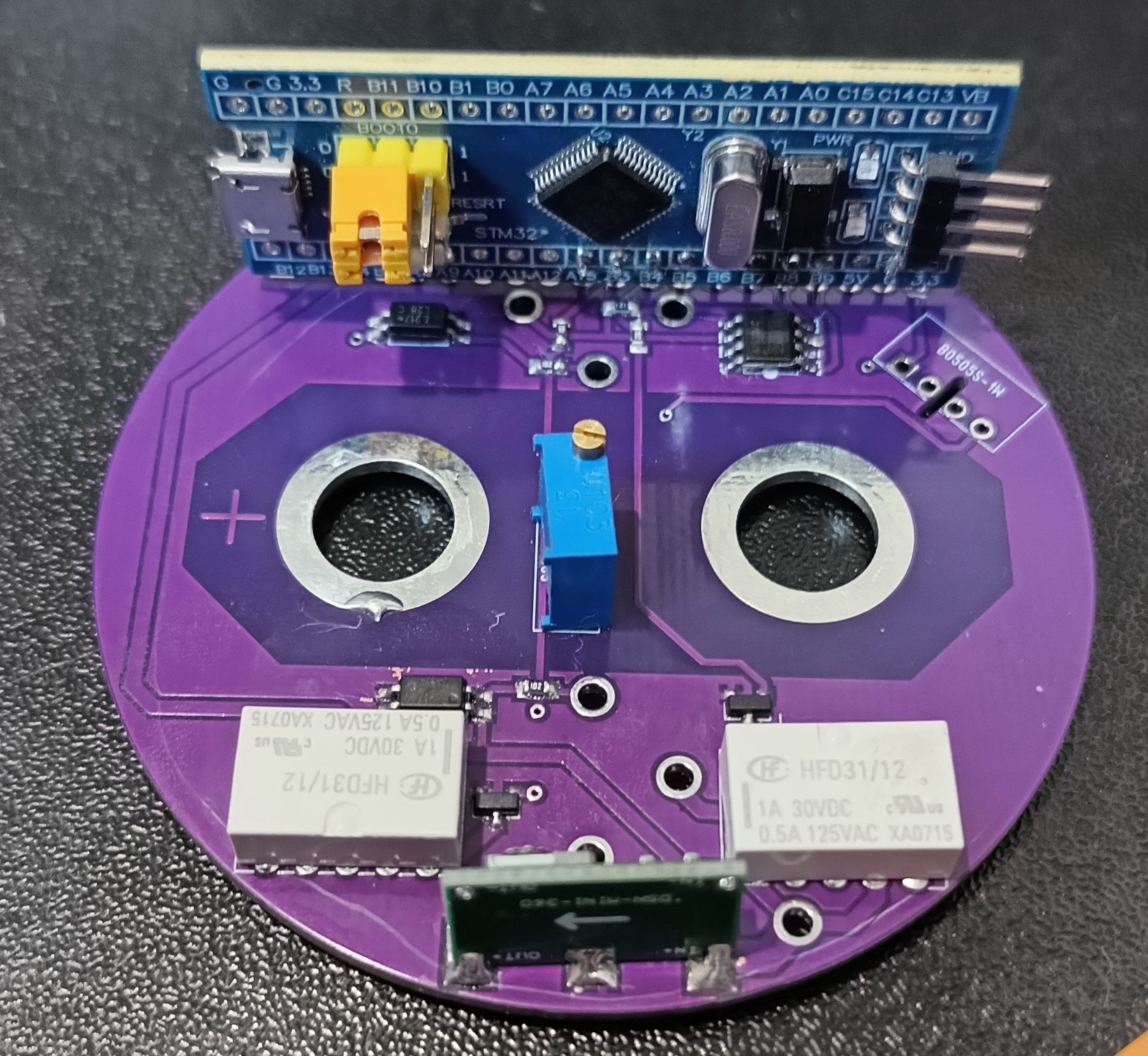
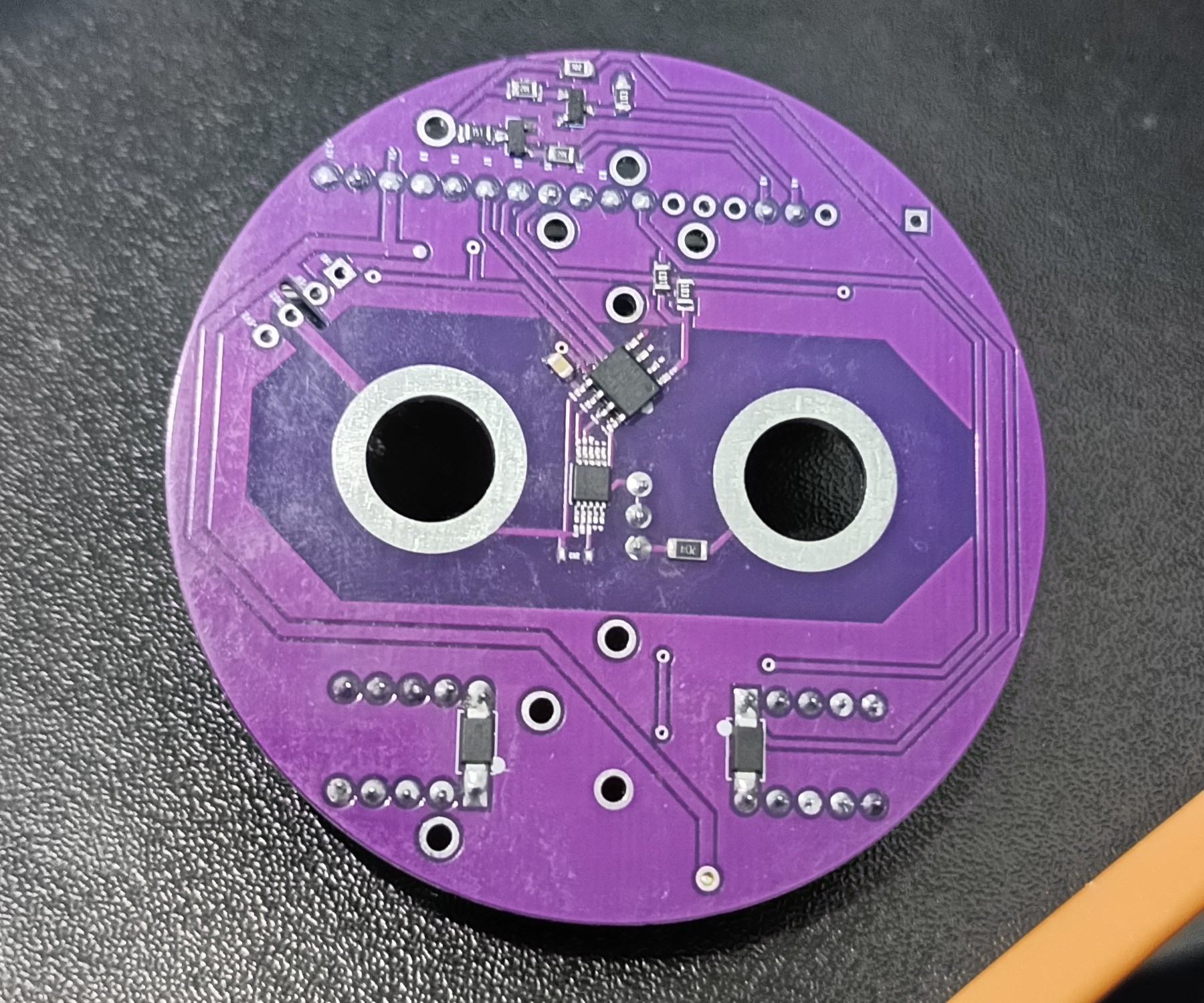
Our example CHAdeMO controller is implemented inside charging plug itself! Basic stm32f103 controller, INA226 to measure terminals voltage, few relays, optocouplers. 12v DC/DC.
Initial intention is to charge vehicle with power less than 30kw and use SAE J1772 compatible cable. This is very unique, but cheap design. It has several challenges:
- There is no CAN interface in SAE j1772 compatible cable (No CAN communication). Since our main controller is within plug itself it enables asymetrical communication: Generic charging device -> single communication line (MODBUS) -> CHAdeMO plug with main controller -> CAN communication with vehicle. Communication is done via PP line (single wire UART 0v-12v range), and 12v power supply via CP line.
- Power limit is 30kWt (Due to cable physical limits)
- Communication line noise (Single line communication may be distorted by DC line EMI)
- Higher communication latency (Due to EMI, single line and master/slave nature - there's considerable latency assumed)
In our example generic charging device is a special block that is consist of multiple parts: Inverters, displays, buttons, power providers, relays, safety systems, etc.
Each generic charging device part must be self-sufficient and have well defined communication interface, be easily replaceable and most important vendor independent. Independence is achieved by having custom MCU controller which implements MODBUS slave and software driver on every part, aligned with our Internal requirements.
Alternative communication and power supply (for our example CHAdeMO controller) design approaches include:
- using DC power line for communication as done in CCS protocol. (expensive)
- using both CP and PP lines for communication, harvesting 12v from parasitic voltage on a communication line (tricky)
- using wireless interfaces for communication (highly questionable)
- using other communication protocols other than MODBUS.
- using LIN transciever, for example tja1020 (made exactly for this purpose)
Internal requirements
(Our example CHAdeMO controller) After boot 12v in, check initial conditions:
- Test of all pins in correct condition
- check high voltage cable is 0V
- modbus check PSU module
- modbus check UI module
- modbus check other relevant modules report succes or failure.
Communication specs
to be continued
Software implementation details
Our example CHAdeMO controller software implementation lies within examples/main_plug_board/firmware/. Is written on C99, utilising STM32CubeMX code generator software. Is based on simple makefile. Uses OpenOCD + GDB + SEGGER RTT for debugging. For details see: examples/main_plug_board/firmware/README.md
License
Generated by
 1.14.0